Wellness
Gut health 101: fermented foods you can find locally
From kimchi on Sharrow Vale Road to kefir at the Moor Market, Sheffield's fermented food scene is quietly booming — and your microbiome might thank you for paying attention.
4 min read
Wellness
From kimchi on Sharrow Vale Road to kefir at the Moor Market, Sheffield's fermented food scene is quietly booming — and your microbiome might thank you for paying attention.
4 min read
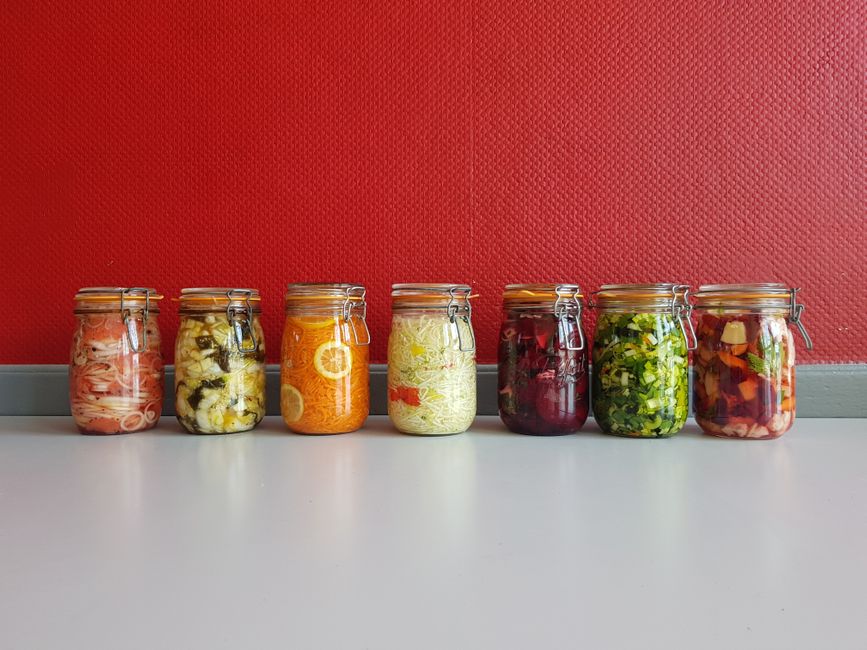
Sales of fermented foods in the UK rose by 24 percent between 2023 and 2025, according to figures from the Agriculture and Horticulture Development Board, and Sheffield's independent food scene is keeping pace. Walk the stretch of Sharrow Vale Road on a Saturday morning or browse the stalls inside the Moor Market and you will find miso pastes, live-culture yoghurts, krauts and kombuchas that were not there three years ago. This is not a trend that arrived from nowhere.
Interest in gut health has surged partly because the science underpinning it has become harder to dismiss. Researchers at King's College London published findings in 2024 linking a diverse gut microbiome — the colony of bacteria living in your digestive system — to improved mood regulation, stronger immune response and lower systemic inflammation. The practical upshot for most people is fairly simple: eating a wider range of fermented, fibre-rich foods is one of the lowest-cost, lowest-risk interventions available. No prescription required.
The Moor Market, which reopened in its current form in 2013 and sits at the heart of the city centre, is the most accessible starting point. Stall holders including the long-running Sheffield Honey Co sell live-culture honeys and probiotic-rich products alongside more conventional produce. Across town at Heavygate Road in Crosspool, a small delicatessen has stocked unpasteurised sauerkraut and kombucha on tap since 2022 — the kombucha runs at around £3.50 for a 330ml pour, which is competitive with supermarket shelf prices for the bottled equivalent.
On Sharrow Vale Road in the Hunters Bar neighbourhood, at least two independent grocers now carry Korean kimchi made locally by a Sheffield-based producer who supplies to restaurants in Kelham Island. That local supply chain matters: unpasteurised kimchi loses much of its live bacterial culture if it sits in a warehouse for weeks. Buying it locally, made in small batches, generally means a higher viable bacteria count by the time it reaches your plate.
Forge Bakehouse on Abbeydale Road deserves a mention for its long-ferment sourdough. While sourdough is not technically a probiotic food in the strict sense — the baking process kills the live cultures — the long fermentation does break down gluten proteins and phytic acid, making the bread easier to digest for many people. A standard 800g loaf runs to £5.20 and has become a staple for regulars who report fewer of the bloating symptoms they associate with mass-produced bread.
Fermented foods are not a cure for anything. A 2021 Stanford University study, widely cited since, found that a diet high in fermented foods increased microbiome diversity in participants over a 17-week period more effectively than a high-fibre diet alone. Increased diversity is associated with better resilience against pathogens and reduced markers of inflammation. But gastroenterologists are consistent on one point: the benefits compound over time and require consistency, not a single kefir habit you sustain for a fortnight.
For Sheffield residents new to this territory, nutritional therapists based at the Sheffield Centre for Integrative Health on Campo Lane recommend starting with one fermented food per day rather than overhauling the entire diet at once. Kefir — a fermented milk drink with roughly 30 distinct strains of bacteria and yeast — is often suggested as a beginner option because it is widely available at around £1.80 for a 500ml bottle at most major supermarkets, including the Waitrose on Ecclesall Road.
The practical advice is this: start small, buy local where the budget allows, and think in terms of variety rather than volume. A tablespoon of sauerkraut alongside lunch, a glass of kefir in the morning, a slice of real sourdough in the evening — none of it needs to be expensive or complicated. Sheffield's food markets and independent producers have already done much of the sourcing work. The rest is habit.

Wellness

Wellness

Wellness

Wellness
About this article
Published by The Daily Sheffield
Spread the word
Daily brief
Free, in your inbox before 7am. Weekdays.
The Daily Network — local news across Australia